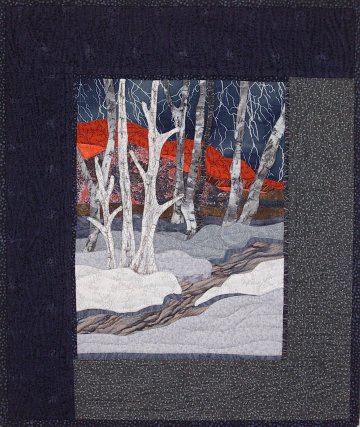
I appreciate musings about how to find the inner voice because it implies there really are voices that whisper motivational messages into the inner sanctum, which force the creation of superb examples of artistic talent. Oh, what if I do not hear the voices? What is wrong with me? And, if I hear conflicting advice from the sanctified ramblings, am I ready for the funny farm? The simple answers are: Don't worry...Nothing, and...Maybe, yes.
Let us become a little more realistic about that inner spirit each of us possess. Is one suppose to actually feel its presence, guidance and influence? The voice you are suppose to hear is YOURS, you are the Muse, and not some ethereal spirit waving a magic wand over your head. In order to tap into that part of your being, you have to give it space, quiet and freedom to do the back-flips you expect.
Your Muse requires frequent feeding, something like fertilizer we spread upon the flower beds to make the blooms pop open. A complete Muse fertilizer may have a variety of ingredients: Books, music, time alone, silence, sleep, change of scenery, nutritious food, sensual contact, moving at a snails pace as in slow down. The special ingredients are a little different for each of us. For me, in addition to the ones already listed, a glass of a very good wine, and the daily walks with my dog and husband are important. Ho-hum? Not at all, such things provide needed diversion for my Muse.
My Muse requires time and space for massaging the ideas and influences that may contribute to the really big idea worthy of my time and effort. She does rebel when overloaded with too many expectations, and she will shut down, go flat and stall. For many artists, we are our own worst enemy, in a sense, because we place such demands upon our Muse. We beat on her, expecting instant results, inspiration and blinding insight. We demand she run the marathon, meet the deadlines, weave fabric into golden panels, crank out those pieces of art to inspire awe from the public, and to keep up the frantic pace. Our personal Muses are often overworked with no time allocated to recuperate, repair and prepare for the next round of creative activity. We provide little time for getting anything in order and expect everything to be sensational. And, when it does not happen, we think "there is something wrong with me".
For those having a problem with kick-starting your Muse, give yourself permission to take a break to refresh yourself and your Muse that so much is depended upon. She's in there, she's just tired and needs a vacation from her benefactor. Or, perhaps she needs a boost with another plan of attack, another perspective, or a re-evaluation of the other priorities that weigh on the creative processes.
Friday, March 12, 2010

Thursday, March 11, 2010
Trumpets of Spring
In my past posting, I mentioned the yellow crocus that had survived the ice storm, and announced that the jonquils have bloomed. This cluster is ever faithful and poked up through the dark brown soil when I needed a boost in spirits the most. How can anyone be a grump when she spies the resounding joys of jonquils? These perky blooms are the ones I used last spring as inspiration for one piece in my garden series last year.

Back Fence Conversation
 This time of year, there are many articles written offering help on many topics. Recently, I read an article about recommendations for starting home improvement projects and was struck by how similar the suggestions were to what I generally follow when creating my pictorial art.
• Plan-Plan-Plan. Winging it can be an artist’s best friend or the worst enemy. Acknowledge the difference. Establishing goals and milestone markers fall under this idea, too.
• Spousal support. No one needs a spouse laying cinderblocks on your creative path, stopping forward moment. Frequently, a spouse views these creative impulses as silly until the first works are sold, then suddenly, the light goes on and understanding is reached, as in "You can actually make money doing this stuff?"
• Ask for Help. Plowing ahead can ruin some great projects. Asking for help does not mean you are committed to following that help or direction. Example: I ask my husband frequently what he thinks of a new idea I have or what he sees during the initial stages of a new work. I also tell him up front that the question does not require him to make a decision or take action. It is just talk, feedback that I need, and I may not follow his advice. He has learned to understand what I am asking and does not sulk when I ignore his opinion or suggestions. No spouse? Establish a small support group of artist friends to handle this concern.
• Be realistic. Do you want to invest the time and money? Do you have the skills to do the project? If not…
• Develop the Skills you need. Take classes and workshops. Read. Research. Experiment. Do the baby steps that will advance your mastering of skills and techniques required to reach the anticipated end results. This step also has great long-term benefits because an artist’s next project will be better than the last one.
• Create a Budget. Determine the limits you are willing to spend if you have a tight budget. This is simply making the most of limited resources in order to reach the artistic goal. This may also suggest that conflicting budgetary demands may require re-evaluation and family cooperation. Where can I save money elsewhere so that I have the resources for the new projects? Again, be realistic, focus and be choosy about the next effort.
• Create a Materials list. Identifying the supplies needed in advance of starting a new work will reduce wasted time rounding up stuff, trips to the store, or waiting for the arrival of postal delivery. This step also saves money.
• Buy the right tools. This suggestion is not meant to provide the go-ahead to buy more tools. Rather, it means having the correct tools for specific tasks that the project requires, which eliminates frustration, poor workmanship and possibly on-the-job accidents. Invest in good quality tools, the best that you can afford. You may have to be patient and save up for the quality. You will have them a very long time and you will be happier.
• Take care of the tools. Properly clean, repair, sharpen, oil, and put away carefully at the end of usage means those tools will be available the next time. I still use paintbrushes that I bought 30 years ago because I bought the best I could afford, and carefully cleaned them every time I use them. I wipe off my good scissors, periodically clean the rotary cutter, and have my sewing machines routinely serviced.
• Measure Twice. Cut Once. Carpenters know this mantra–by–heart because it reduces waste and mismatched seams. If one is an artist that free–cuts and doesn’t like measuring anything, this tip may simply suggest that paying attention to what you are doing may eliminate the pain and suffering of not meeting the expectations.
• Be safe as you work. Developing good work habits may spare the artist injury from inhalation of toxic fumes, from the tools and from the lack of concentration as you are working. Be aware of your surroundings and what you are doing to protect yourself, but also to shield little children and perhaps your pets that share your workspace. If your mind is wandering, stop and do something else.
My final word of advice is:
A cluttered workspace leads to muddled thinking and chaotic working, which interrupts the workflow in general.
Sunday, October 11, 2009
The Alliance for American Quilts
This past week I was honored to be interviewed for the project called, "S.O.S.–Save Our Stories: The Alliance for American Quilts. I was interviewed by Karen Musgrave who asked me to share a photo of my quilt, Prairie Thunder, for the archives, and to discuss my work: what inspires me, what is my creative process for making my textile artwork, how did I become interested in quilts and other personal insights. I was also asked to provide my views on other quilt-related topics, such as the meaning of quiltmaking in women's history.
 Prairie Thunder, 67" x 54" (in a private collection)
Knowing that I am one among 1,000 participants-to-date in this program, I was highly complimented by the invitation and thoroughly enjoyed the opportunity. To realize that my words and my voice have been archived for use by people conducting research, and I suppose, by those who may be curious, is a humbling thought. I am grateful.
Thursday, September 24, 2009
Anticipation

With the swing of the weathervane, the recent winds have been coming from the North, which means cooler temperatures. These refreshing temperatures have fired up my energy for tackling the laundry list of ideas I have been accumulating all summer. I’ve completed a series of small works and will post them another day.
Today, however, I am very excited anticipating the International Quilt Festival in Houston next month. I have received the magic phone call telling me that Firestorm has received an award, but I won’t know the details until October 13th.
Monday, September 7, 2009
End of Summer Road Trips
Lately, I have been on the road providing lectures and workshops to quilting guilds. It’s an activity I truly enjoy because I get to connect with quilters of all age groups, level of expertise, and favored style of quiltmaking. It never fails to inspire me to associate with people who love to play with fabric to create wonderful textile art and are willing to share most everything with one another. I always learn so much from other quilters and am grateful for being able to meet each and every one..jpg)
.jpg)
As a reward for getting through this summer heat, I’ll jump in my car again and drive to Santa Fe for my annual renewal of creative zing that only the rarefied air of New Mexico’s capital can provide. I always find great subject matter for my quilted art, such as, Santa Fe, #304.
Friday, August 7, 2009
Garden Influences
There’s a full moon now but like the summer days it will soon begin to wane, although the high heat remains unrelenting. I don’t believe I can fault the full moon for my lack of energetic activity in my studio, but I am able to blame my inertia to the depressing heat, 101° F. today.
 It doesn’t really matter for there will be a ‘dance of the moonflowers’ in my garden tonight. I noticed the two bushes are once more loaded with buds that are promising to pop open after dark to fill the air with wonderful scent. The full moon will spotlight the blooms. It’s always a fun little festival when this occurs.

 It doesn’t really matter for there will be a ‘dance of the moonflowers’ in my garden tonight. I noticed the two bushes are once more loaded with buds that are promising to pop open after dark to fill the air with wonderful scent. The full moon will spotlight the blooms. It’s always a fun little festival when this occurs.
I understand why this flower was among Georgia O’Keeffe’s favorites. It’s just a wild weed, but the plants provide endless pleasure and have inspired one of my favorite wall hangings.
Moonflowers at Midnight
42" × 35 " ©Carol Ann Sinnreich
Subscribe to:
Posts (Atom)


.jpg)